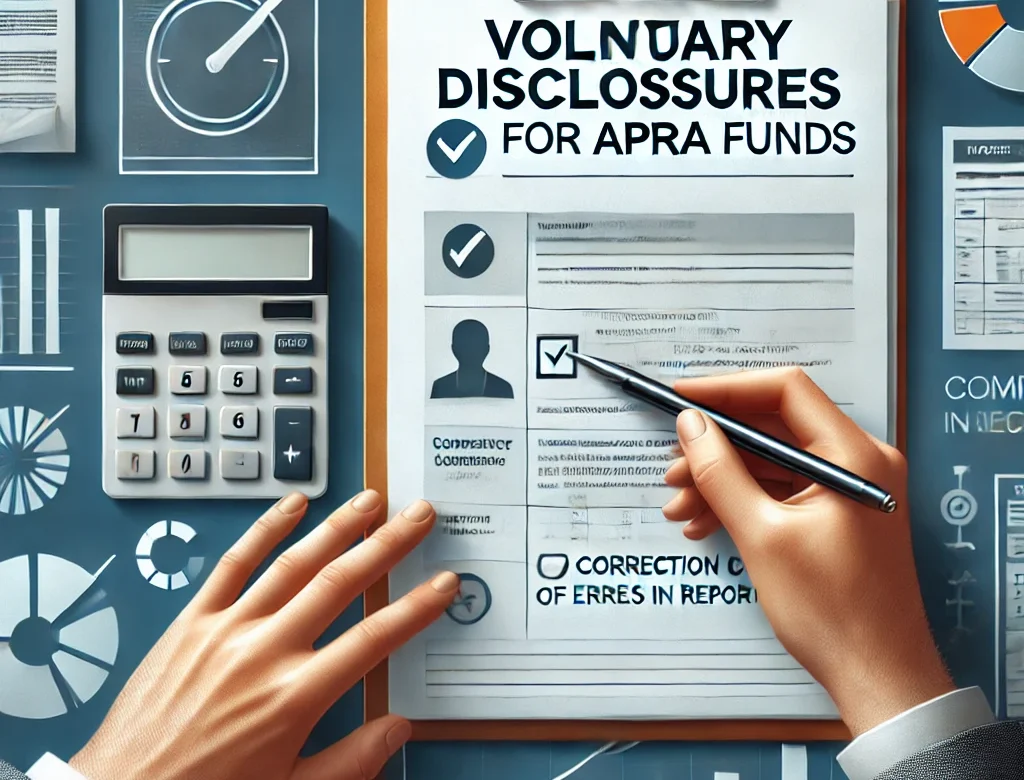
When to make a voluntary disclosure
As an Australian Prudential Regulation Authority (APRA) fund, you should contact ATO as early as possible if:
- You made an error in your reporting or payment obligations.
- You’re having difficulty complying with your reporting or payment obligations.
- You’re unsure about a compliance matter.
How to make a voluntary disclosure
You should lodge a voluntary disclosure request by accessing the Super Enquiry Service (SES) for APRA funds. They’ll work with you to resolve reporting errors to help you meet your obligations and protect member benefits.
Disclosures can range from relatively routine matters to complex situations, such as systemic errors that have occurred over time.
If you identify any material errors or omissions with the balances, contributions, or events reported, you need to amend reporting within 30 days of becoming aware of these errors or omissions.
Information you need to provide
When you contact ATO, include copies of any supporting documents and the following information:
- Your name, including position held, and fund and (if applicable) administrator details.
- Your phone number and address.
- Fund and administrator Australian business number (ABN).
- Nature of the disclosure, including the type of reporting or payment that was affected.
- The relevant accounting period the error relates to, including the lodgment period and due date.
- The amounts to be increased or decreased, or sufficient information to allow us to readily determine the extent of the error – for example, the number of members affected and the corresponding dollar value.
- Where the error arose – your fund, a previous fund (whose members have been transferred to your fund), or an administrator on your behalf.
- Any action or actions already taken or planned to address the past error, deficiency, or miscalculation and the potential for the issue to occur again, including the relevant dates.
- Any other relevant information, including how the error or omission was discovered, and whether it is an isolated or systemic error, a software provider issue, a procedural issue, or similar.
- A signed and dated declaration.
See Information we require when you make a voluntary disclosure.
How we process your voluntary disclosure
ATO resolves these issues by:
- Working with trustees to fix the errors.
- Getting an understanding of the issue and the type of reporting the error relates to, in as much detail as possible.
- Addressing technical and legal implications and the validity of the reporting error.
- Ensuring that fixes are developed to prevent recurrence of the issue in the future.
They work with funds to understand the cause of the issue and the impact on the population of members involved, which often requires funds to provide further information.
You may receive a reduction of penalties and interest charges that would normally apply when you make a voluntary disclosure.
Please note: Many of the comments in this publication are general in nature, and anyone intending to apply the information to practical circumstances should seek professional advice to independently verify their interpretation and the information’s applicability to their particular circumstances.