
If you run a small business in Melbourne or Brisbane and you’ve been putting off buying that new espresso machine, work ute, set of tools, or office fit-out — the next six weeks matter more than usual. The $20,000 instant asset write-off is legislated to apply only until 30 June 2026. After that, under the law as it stands today, the threshold collapses back to just $1,000.
There’s a twist worth understanding before you rush to the checkout. In the 12 May 2026 Federal Budget, the Government announced it would make the $20,000 write-off permanent from 1 July 2026. Good news — but that measure is still an announcement, not an Act of Parliament. The only thing you can actually plan around right now is the legislated deadline of 30 June 2026.
This is our practitioner’s guide to using the write-off properly this financial year: what qualifies, the traps that catch business owners every June, and a worked example for a Melbourne café.
The 30-second version
| Question | Answer for 2025–26 |
|---|---|
| Who’s eligible? | Businesses with aggregated annual turnover under $10 million |
| How much per asset? | Each asset must cost less than $20,000 |
| Is it per asset or total? | Per asset — you can write off multiple assets |
| Does the $20k include GST? | GST-exclusive if you’re registered for GST; GST-inclusive if you’re not |
| By when? | First used or installed ready for use between 1 July 2025 and 30 June 2026 |
| New or second-hand? | Both qualify |
| What happens after 30 June 2026? | Reverts to $1,000 under current law (Budget proposes keeping $20k — not yet legislated) |
What the instant asset write-off actually is
Normally, when your business buys a piece of equipment, you can’t claim the whole cost in one year. You depreciate it — claiming a slice of the cost as a deduction each year over the asset’s effective life. A $12,000 machine might give you a few hundred dollars of deduction this year and the rest spread over five or more years.
The instant asset write-off cuts through that. If the asset costs less than $20,000 and you meet the rules, you deduct the entire business-use portion in the year you start using it. That’s a bigger deduction now, which means lower taxable income now, and — for many small businesses — real cash flow relief right when the ATO bill lands.
💡 It’s a timing benefit, not free money. You’re bringing forward deductions you’d eventually get anyway. The value is in the cash you keep this year, and in the certainty of claiming it before the threshold drops. Don’t buy something your business doesn’t need just to chase a deduction — you only ever save the tax rate (up to ~30% for a company), not the full price.
What you can — and can’t — write off
Plenty of everyday business purchases qualify. A few common examples for the businesses we work with across Camberwell, Greater Melbourne and Brisbane:
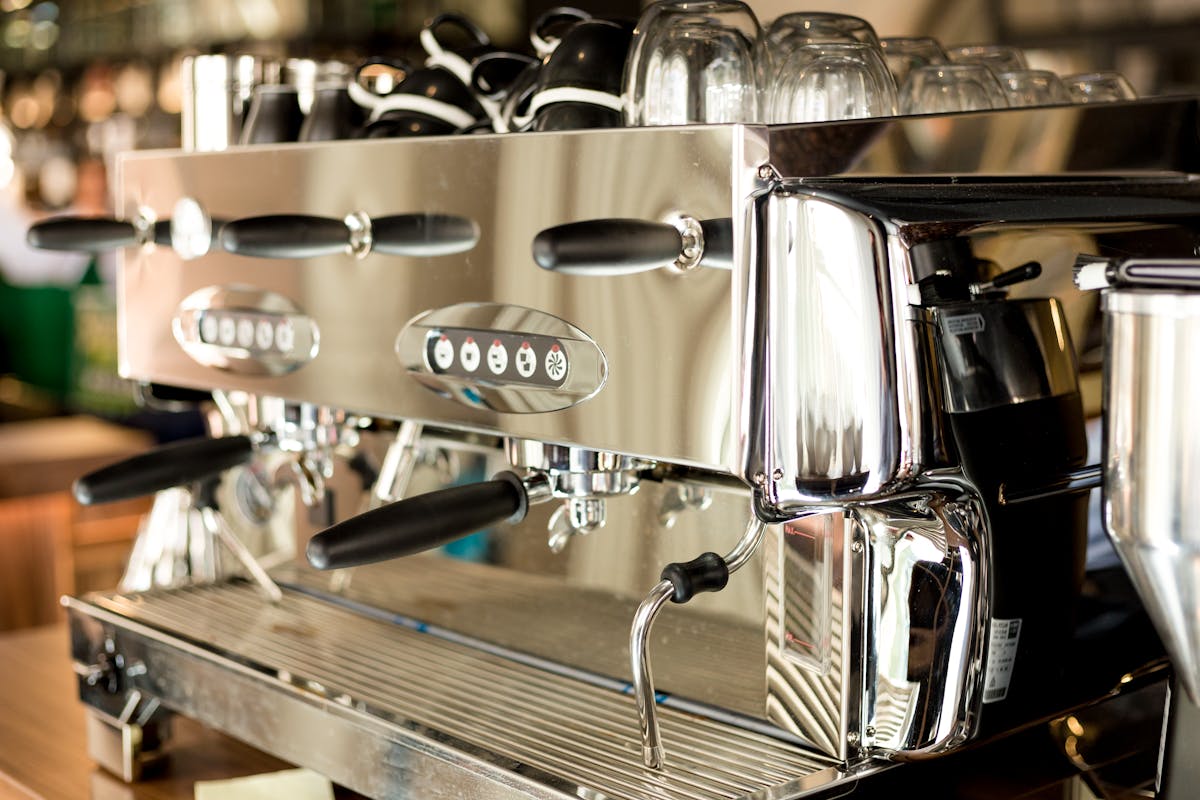
- Hospitality: espresso machines, commercial fridges, ovens, POS systems, furniture
- Trades & construction: power tools, generators, trailers, a second-hand work ute (under $20k)
- Professional & retail: laptops, monitors, office desks and chairs, shelving, security cameras
- Any business: air conditioners, signage, solar panels installed for the business
What doesn’t qualify:
- Assets costing $20,000 or more — these go into your small business depreciation pool instead (see below)
- Capital works — building structures, renovations and fixed improvements have their own rules
- Assets you lease out to someone else more than you use them in your business
- Horticultural plants, software allocated to a software development pool, and trading stock
💡 Cars have an extra cap. A passenger vehicle still has to cost under $20,000 to be written off outright — and most don’t. For more expensive cars, a separate car limit of $69,674 (2025–26) caps the depreciable cost. Talk to us before buying a vehicle through the business; the GST, FBT and logbook implications usually matter more than the write-off itself.
The bigger purchase: what if the asset is $20,000 or more?
You don’t lose the deduction — you just claim it differently. Assets costing $20,000 or more are added to your small business general pool, where you deduct 15% in the first year and 30% each year after. And here’s a quieter rule worth knowing: if your entire pool balance is below $20,000 at the end of the year, you can write off the whole pool at once. Your bookkeeper should be tracking this before 30 June.
The Budget twist — and why you shouldn’t bank on it
On Budget night (12 May 2026), the Treasurer announced the $20,000 instant asset write-off would become permanent from 1 July 2026, alongside a measure letting companies with turnover up to $1 billion carry tax losses back for a refund. The stated goal: simpler obligations and around $32 million a year in saved compliance costs for small business.
We welcome it. But two things keep our advice cautious:
- It isn’t law yet. The instant asset write-off has a long history of being announced, extended at the last minute, and occasionally passing the Senate after the financial year it applied to had already begun. Until a bill receives Royal Assent, the prudent position is the legislated one.
- The legislated position today is the $1,000 threshold from 1 July 2026. If you have an asset you genuinely need and it’s ready to use before 30 June, the certainty sits in this financial year.
Translation for business owners: don’t defer a needed purchase to next year on the assumption the $20k threshold will still be there. Plan around what’s legislated; treat the permanence as an upside if and when it passes.
Worked example: a Camberwell café
May runs a café in Camberwell, trading as a company with $850,000 turnover — comfortably under the $10 million threshold and registered for GST.
- In May 2026 she buys a two-group espresso machine for $16,500 including GST. Because she’s GST-registered, the relevant cost is the GST-exclusive figure of $15,000 — under the $20,000 threshold. ✅ Fully written off in FY2025–26.
- She also buys three café tables and chairs at $1,800 each. The threshold is per asset, so all three qualify — another $5,400 deduction.
- She’d been eyeing a $28,000 cool room. That’s over the threshold, so it goes into her small business pool at 15% in year one — still deductible, just spread out.
By bringing the espresso machine and furniture into this year, May claims roughly $20,400 in immediate deductions, cutting her company’s taxable income and her tax bill at the 25% small-business company rate by around $5,100 this year. The key was that everything was installed and in use before 30 June — not just ordered.
The timing trap that catches people every June
The rule is “first used or installed ready for use” by 30 June — not “ordered” or “paid for”. Every year we see business owners miss the deduction because:
- They paid a deposit in June but the equipment wasn’t delivered or installed until July.
- They bought a machine that needed professional installation booked for the following week.
- They financed the purchase and assumed the timing followed the loan — it doesn’t; it follows when the asset is ready to use.
If you want the deduction in FY2025–26, the asset needs to be physically in your business and ready to operate by 30 June 2026. Cutting it fine? Get the installation booked now.
Your 6-step EOFY action plan
- List what you actually need. Start from genuine business need, not the deduction.
- Check each item’s cost against $20,000 — GST-exclusive if you’re registered.
- Confirm delivery and installation before 30 June. “Ready for use” is the test.
- Keep the paperwork: tax invoice, proof of payment, and a note of the business-use percentage.
- Mind your cash flow. A deduction saves you the tax rate, not the whole price — don’t spend $20k to save $5k you didn’t need to spend.
- Talk to your accountant first if the purchase is large, financed, or a vehicle.
This sits alongside the broader year-end moves we covered in our Pre-EOFY 2026 strategic tax decisions guide and the EOFY 2026 small business checklist.
Frequently asked questions
Can I claim the instant asset write-off if I’m a sole trader?
Yes. Sole traders, partnerships, companies and trusts can all use it, provided the business has aggregated turnover under $10 million and the asset meets the rules. For sole traders, you claim the business-use portion only — if you use a laptop 70% for business, you write off 70% of its cost.
Is the $20,000 a total annual limit?
No — it applies per asset. You can write off as many individual assets as you buy this year, as long as each one costs under $20,000.
Does second-hand equipment qualify?
Yes. The write-off doesn’t distinguish between new and second-hand assets. A used commercial fridge or a second-hand work ute under $20,000 can qualify if it meets the other conditions.
What if my asset costs exactly $20,000?
It must cost less than $20,000 to be written off immediately. An asset at exactly $20,000 (or more) goes into the small business depreciation pool instead.
Will the $20,000 threshold still apply after 30 June 2026?
Under current law, no — it reverts to $1,000 from 1 July 2026. The 2026 Federal Budget proposed making the $20,000 threshold permanent, but that proposal still needs to pass Parliament. We’ll update this page once legislation is confirmed.
Sources
- Australian Taxation Office, $20,000 instant asset write-off for 2025–26, Small Business Newsroom
- Australian Taxation Office, Instant asset write-off for eligible businesses and Simpler depreciation for small business
- Treasury Laws Amendment (Strengthening Financial Systems and Other Measures) Act 2025
- Australian Government, Budget 2026–27 — small business measures (12 May 2026)
About the author
Lily Zhang is the founder of Wiselink Accountants, a Camberwell-based CPA firm serving 500+ Australian SMEs and individual taxpayers since 2013. She is a CPA Australia member, Registered Tax Agent, ASIC Registered Agent and NTAA Member. Lily and the Wiselink team service Greater Melbourne and Brisbane in English and Mandarin.
Not sure whether your June purchase will qualify — or whether it’s even worth it for your cash flow? Book a free 20-minute call with a Wiselink CPA. We’ll give you a straight answer and the timing that works for your business. Servicing Melbourne and Brisbane.
This article is general commentary, not personal advice, and is current as at 20 May 2026. Tax outcomes depend on your individual circumstances. Liability limited by a scheme approved under Professional Standards Legislation.